

24-07-2025
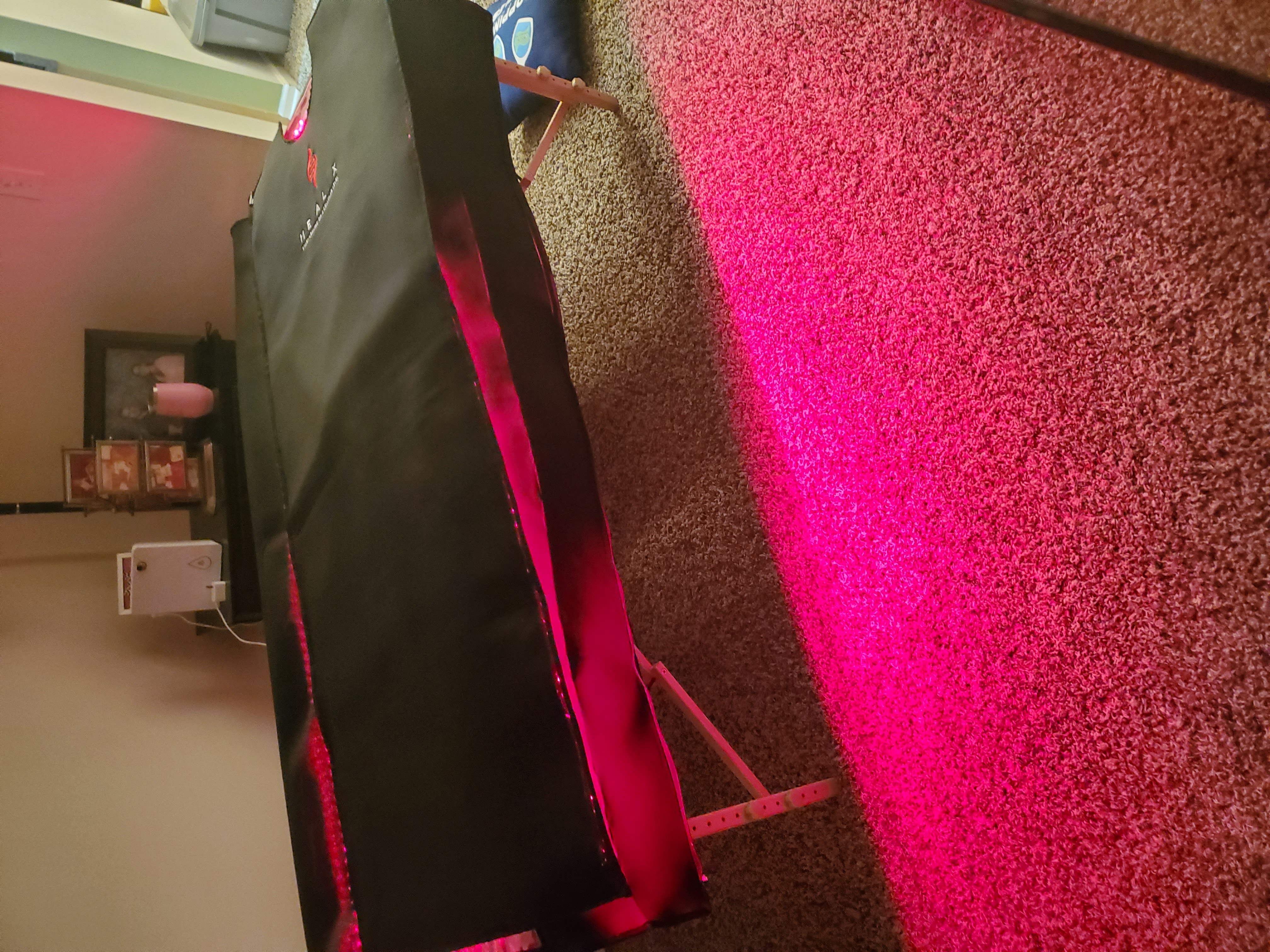
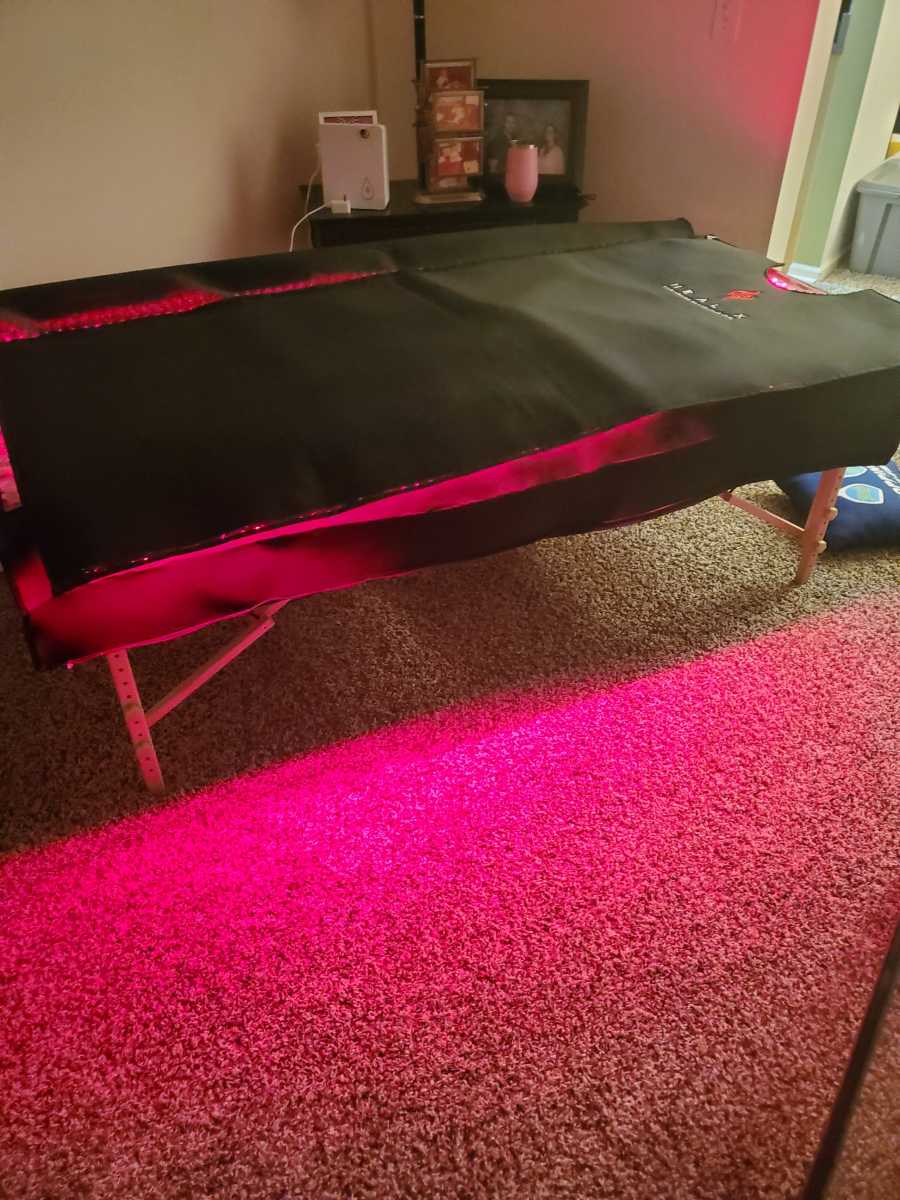
I love my Glow Pod!
I use it everyday to treat my chronic illness that causes pain and inflammation. The owner Mike and Bridget were amazing in providing information to me about this product.


Satisfaction Guaranteed

2-4 Day Free Shipping

2 Year Warranty

Based on 600+ Reviews
A Red Light Therapy Blanket


“The glow pot is amazing the customer service there is so excellent it's hard to find that kind of kindness in the world definitely love this company 🌞❤️”
“I use it everyday to treat my chronic illness that causes pain and inflammation. The owner Mike and Bridget were amazing in providing information to me about this product.”
"Yeah, i much prefer laying down in the glow pod then standing like I was doing with my panel mounted on the back of a door. Way more convenient, way more enjoyable."


Size |
71” x 32”x 12" |

Weight |
18lbs |

Power |
Voltage 24V. Wattage 350W |

Irradiance |
101 mw/cm2 at surface |

Bulbs |
2680 LED Bulbs |

LEDs |
8040 LED Chips (3 per bulb) |

EMF |
O micro tesla at surface |

Red Light |
660nm |

Near Infrared Light |
850nm |


 Unique Red Light Ratio
 Clinical Strength Results
 Saves vs. Paid Sessions
See how simple it is to set up, relax, and experience the benefits of red light and near-light therapy
 Rated 4.9/5 by 163 Verified Customers


Repair Cells, Reduce Inflammation, and Improve Circulation.
Reduces Oxidative Stress
Full-Body Inflammation Relief
Boosts Strength, Endurance & Athletic Performance
Improve Circulation & Vascular Health
Safe clinical capabilities from advanced materials.

Designed for direct skin contact, our premium TPU liner is biodegradable, non-toxic, and food-grade safe for complete peace of mind.

High-output medical-grade LED bulbs, each featuring three light diodes to maximize therapeutic benefits.

Engineered for absolute safety, our design ensures zero detectable EMF exposure, so you can heal without risk.

The HEALiX Glow features a padded design for superior relaxation and full-body coverage, in stark contrast to rigid, free-standing units

Flexible and accessible for all body types, with an open-bottom build that lets users slide in fully or adjust for facial exposure.
Healing at a cellular level comes with welcome extras.

Supports faster recovery and improved performance for athletes and active lifestyles.

Improves cellular energy (ATP production) to fuel workouts and reduce fatigue.

Encourages repair of damaged nerves and supports overall nervous system health.

Stimulates collagen and elastin production, reducing fine lines and wrinkles.

Helps soothe chronic pain, arthritis, and muscle soreness through deep-penetrating red light.
4.9 based on 163 verified reviews
In animal and clinical trials low-level laser therapy (LLLT) using red, infrared and mixed wavelengths has been shown to delay the development of skeletal muscle fatigue. However, the parameters employed in these studies do not allow a conclusion as to which wavelength range is better in delaying the development of skeletal muscle fatigue. With this perspective in mind, we compared the effects of red and infrared LLLT on skeletal muscle fatigue. A randomized double-blind placebo-controlled crossover trial was performed in ten healthy male volunteers. They were treated with active red LLLT, active infrared LLLT (660 or 830 nm, 50 mW, 17.85 W/cm(2), 100 s irradiation per point, 5 J, 1,785 J/cm(2) at each point irradiated, total 20 J irradiated per muscle) or an identical placebo LLLT at four points of the biceps brachii muscle for 3 min before exercise (voluntary isometric elbow flexion for 60 s). The mean peak force was significantly greater (p < 0.05) following red (12.14%) and infrared LLLT (14.49%) than following placebo LLLT, and the mean average force was also significantly greater (p < 0.05) following red (13.09%) and infrared LLLT (13.24%) than following placebo LLLT. There were no significant differences in mean average force or mean peak force between red and infrared LLLT. We conclude that both red than infrared LLLT are effective in delaying the development skeletal muscle fatigue and in enhancement of skeletal muscle performance. Further studies are needed to identify the specific mechanisms through which each wavelength acts.
de Almeida P, Lopes-Martins RA, De Marchi T, Tomazoni SS, Albertini R, Corrêa JC, Rossi RP, Machado GP, da Silva DP, Bjordal JM, Leal Junior EC. Red (660 nm) and infrared (830 nm) low-level laser therapy in skeletal muscle fatigue in humans: what is better? Lasers Med Sci. 2012 Mar;27(2):453-8. doi: 10.1007/s10103-011-0957-3. Epub 2011 Jul 22. PMID: 21814736; PMCID: PMC3282894.
Photobiomodulation (PBM) describes the use of red or near-infrared (NIR) light to vstimulate, heal, and regenerate damaged tissue. Both pre-conditioning (light delivered to muscles before exercise) and PBM applied after exercise can increase sports performance in athletes. This review covers the effects of PBM on human muscle tissue in clinical trials in volunteers related to sports performance and in athletes. The parameters used were categorized into those with positive effects or no effects on muscle performance and recovery. Randomized controlled trials and case-control studies in both healthy trained and untrained participants, and elite athletes were retrieved from MEDLINE up to 2016. Performance metrics included fatigue, number of repetitions, torque, hypertrophy; measures of muscle damage and recovery such as creatine kinase and delayed onset muscle soreness. Searches retrieved 533 studies, of which 46 were included in the review (n=1045 participants). Studies used single laser probes, cluster of laser-diodes, LED-clusters, mixed clusters (lasers and LEDs), and flexible LED arrays. Both red, NIR, and red/NIR mixtures were used. PBM can increase muscle mass gained after training, and decrease inflammation and oxidative stress in muscle biopsies. We raise the question of whether PBM should be permitted in athletic competition by international regulatory authorities.
Ferraresi C, Huang YY, Hamblin MR. Photobiomodulation in human muscle tissue: an advantage in sports performance? J Biophotonics. 2016 Dec;9(11-12):1273-1299. doi: 10.1002/jbio.201600176. Epub 2016 Nov 22. PMID: 27874264; PMCID: PMC5167494.
For the histological study, the bilateral sciatic nerves were transected, and the left proximal stump and the right distal stump were inserted into the opposite ends of a silicone chamber, leaving a 10-mm gap. Light from an LED device (660 nm, 7.5 mW/cm(2)) was irradiated for 1 h per day. At 3 weeks after surgery, regenerated tissue was fixed and examined by light microscopy. For the antioxidation assay of chamber fluid, the left sciatic nerve and a 2-mm piece of nerve from the proximal stump were transected and inserted into opposite sides of a silicone chamber leaving a 10-mm gap. LEDs were irradiated using the same parameters as those described in the histological study. At 1, 3, and 7 days after surgery, antioxidation of the chamber fluid was measured using an OXY absorbent test.
Chamber fluid is produced from nerve stumps after nerve injury. This fluid contains neurotrophic factors that may accelerate axonal growth. Red to near-infrared LEDs have been shown to promote mitochondrial oxidative metabolism. In this study, LED irradiation improved nerve regeneration and increased antioxidation levels in the chamber fluid. Therefore, we propose that antioxidation induced by LEDs may be conducive to nerve regeneration.
Ishiguro M, Ikeda K, Tomita K. Effect of near-infrared light-emitting diodes on nerve regeneration. J Orthop Sci. 2010 Mar;15(2):233-9. doi: 10.1007/s00776-009-1438-4. Epub 2010 Apr 1. PMID: 20358337.
It has been reported that skin aging is associated with a downregulation in collagen synthesis and an elevation in matrix metalloproteinase (MMP) expression. This study investigated the potential of light-emitting diode (LED) treatments with a 660 nm sequentially pulsed illumination formula in the photobiomodulation of these molecules. Histological and biochemical changes were first evaluated in a tissue-engineered Human Reconstructed Skin (HRS) model after 11 sham or LED light treatments. LED effects were then assessed in aged/photoaged individuals in a split-face single-blinded study. Results yielded a mean percent difference between LED-treated and non-LED-treated HRS of 31% in levels of type-1 procollagen and of -18% in MMP-1. No histological changes were observed. Furthermore, profilometry quantification revealed that more than 90% of individuals showed a reduction in rhytid depth and surface roughness, and, via a blinded clinical assessment, that 87% experienced a reduction in the Fitzpatrick wrinkling severity score after 12 LED treatments. No adverse events or downtime were reported. Our study showed that LED therapy reversed collagen downregulation and MMP-1 upregulation. This could explain the improvements in skin appearance observed in LED-treated individuals. These findings suggest that LED at 660 nm is a safe and effective collagen-enhancement strategy.
Barolet D, Roberge CJ, Auger FA, Boucher A, Germain L. Regulation of skin collagen metabolism in vitro using a pulsed 660 nm LED light source: clinical correlation with a single-blinded study. J Invest Dermatol. 2009 Dec;129(12):2751-9. doi: 10.1038/jid.2009.186. Epub 2009 Jul 9. PMID: 19587693.
Introduction
Several clinical trials have demonstrated that low-level light therapy (LLLT), a method of photobiomodulation, is an effective analgetic treatment. However, the mechanism of action has not yet been finally clarified. In particular, unanswered questions include whether it only affects peripheral or whether it also affects the spinal or supraspinal level. This study aimed to evaluate the effect of low-level light therapy on primary and secondary hyperalgesia in a human pain model.
Methods
This study was planned as a randomized, sham-controlled, and double-blinded trial with repeated measures within subject design. Capsaicin was applied on both forearms of ten healthy volunteers to induce peripheral and central sensitization. One forearm was treated with low-level light therapy; the other served as sham control.
Results
Low-level light therapy significantly increased the mechanical pain threshold, heat pain threshold, and decreased pain intensity.
Conclusions
Our data indicate that low-level light therapy is effective at reducing the heat and mechanical pain threshold in a human pain model, pointing to a significant modulating effect on peripheral and central sensitization. These effects—especially in the absence of reported side effects—make low-level light therapy a promising tool in pain management. The application of low-level light therapy to treat chronic pain should be considered for further clinical trials.
Lang-Illievich K, Winter R, Rumpold-Seitlinger G, Schicho K, Dorn C, Klivinyi C, Bornemann-Cimenti H. The Effect of Low-Level Light Therapy on Capsaicin-Induced Peripheral and Central Sensitization in Healthy Volunteers: A Double-Blinded, Randomized, Sham-Controlled Trial. Pain Ther. 2020 Dec;9(2):717-726. doi: 10.1007/s40122-020-00205-0. Epub 2020 Oct 10. PMID: 33040311; PMCID: PMC7547817.
We believe everyone deserves better health. That’s why we’re making infrared therapy more accessible for those who serve and those facing chronic health challenges.
Many of our customers are veterans, active military, and individuals managing autoimmune conditions like chronic pain and inflammation. We’ve seen firsthand how HEALiX can help, and we want to support those who need it most.
Send us a quick message or email with proof of military service or a diagnosed medical condition, and we’ll provide you with a personal discount code.

45-Day Free Trial

Free Shipping in 2-4 Days

Satisfaction Guarantee

Professional Health Consultation
I use it everyday to treat my chronic illness that causes pain and inflammation. The owner Mike and Bridget were amazing in providing information to me about this product.

It is a great tool to feel regenerated, however, if you are looking for assistance for arthritis or any other type of "ailment" doesn't quite solve the issue. Tried to return but miss it "time frame" by a couple of weeks. I do encourage it for workout relief and relaxation. Warranty is excellent

I have been using the Glow Light Pod regularly for a few weeks now, and I have noticed such an improvement in my energy levels. it's really easy to fit into my routine, and I feel more energized throughout the day.

I have been using the healix glow light pod regularly, and I feel it has helped with my sleep. I fall asleep faster and wake up feeling refreshed.

The Healix Light Pod has helped reduce my arthritis pain. My joints feel more flexible, and I have less discomfort throughout the day.

I’ve only had this for a a little over a week so I cannot say how the results are , but it seems to be well made and I have high hopes it will do the job.

The light pod has helped me reduce muscle stiffness, especially in my shoulders and lower back. It is so relaxing to use, and I have noticed my recovery time has been much faster.

I love this brand. Customer service has always been great in my experience and their products are all well made, high quality. Grab one, you won't regret it!

I'm loving healix, i grabbed the best self bundle and love both the sauna blanket and the glow pod! Both are really well made!

Relatively easy to use and clean. I am anticipating results which I believe will take some time. So upon initial use it seems to be of good quality and I look forward to frequent use and sharing with my family for pain and inflammation.

I love how easy it is to use the Healix glow light pod. It is quick to set up, and I feel relaxed after every session.

I use the Glow Light Pod every day for muscle recovery, and It is been a fantastic addition to my routine. It helps reduce soreness and speeds up recovery.

Being an Army Veteran, I requested a discount code and was instead provided an even better Black Friday discount. Then, the HEALiX Glow Light Pod came in 2 business days, as advertised! The extra Black Friday also came as promised. I LOVE my HELiX Glow Light Pod. It does its job as advertised!

I love using this after my workouts. It is been effective for relaxing and soothing tight muscles.

I feel great when I get out of this thing, no complaints here!
Have any questions? We’re here to help.
Yes! For most users, red and near-infrared light therapy has little to no reported negative side effects, which is one of its greatest strengths.
However, individuals with epilepsy should not use red-light products. Those with cancer, hyperthyroidism, eye disease, light sensitivity, or who are pregnant should consult a physician before use.
The HEALiX Glow Light Pod is designed with an open bottom, allowing users to slide further inside for facial exposure.
For comfort, we recommend placing two yoga blocks at the top to support the pod walls and keep the mat off your face during therapy.
We’ve invested heavily in safe, high-quality materials. The HEALiX Glow uses Thermoplastic Polyurethane (TPU), which is:
Unlike cheaper alternatives, our liner is specifically designed to be non-toxic and skin-friendly.
No, the HEALiX Glow is not a heat therapy product. While near-infrared light can create mild warmth, it does not induce intense sweating.
For those who do experience light perspiration, the waterproof liner is easy to clean with antibacterial essential oil sprays.
Yes! The HEALiX Glow is designed for a wide range of body types:
A red light therapy blanket is a portable, full-body wellness device that uses targeted wavelengths of light, typically 660nm (red) and 850nm (near-infrared), to help reduce inflammation, support collagen production for healthier skin, and aid muscle recovery. It provides a non-invasive, drug-free approach to improving circulation and relaxation, with many users noticing results from daily sessions of 15–30 minutes.
The blanket is designed with numerous small LED lights embedded within a padded fabric that emit specific, research-backed wavelengths (660nm and 850nm). These light waves stimulate the mitochondria in your cells to generate more energy, promoting faster repair and regeneration without the use of harmful UV light.
Consistency is key for effective results, but overuse isn't necessary. It's best to begin with 4-7 sessions per week. Daily use isn't required to experience noticeable benefits.
Yes, excessive use can reduce effectiveness. While generally safe, overuse may cause diminishing results, minor skin irritation, or fatigue as cells become less responsive. This can lead to a plateau where improvements in pain relief or skin health slow down.
For the best results, skin exposure is required so the red light can reach your skin directly.
Yes, sessions lasting 15–25 minutes are typically sufficient to deliver the desired therapeutic benefits.
Yes, closing your eyes is safe and often advised to avoid discomfort from brightness. While red light is generally eye-safe, keeping your eyes closed or using protective eyewear helps prevent temporary strain.
After a session, avoid harsh skincare products like retinoids, AHAs, or strong exfoliants for the next 24–48 hours. It’s also best to wait on makeup, don’t skip sunscreen, and avoid hot water when washing your face since skin may feel more sensitive. Instead, focus on hydration, use a gentle moisturizer and a hydrating serum like hyaluronic acid.
You can, but we don’t recommend it. Phone use won’t block the treatment, but the blue light and distractions can take away from the calming, restorative feel of the session. For the best experience, use the time to relax by trying deep breathing, meditation, or simple mindfulness while you’re in the pod.
Both can work well; it really depends on your goals and how your body responds. Morning sessions may help you feel more energized and support your daily rhythm, while evening sessions can help you relax. Keep in mind that short-term effects can vary from person to person (some feel more alert, others more calm), so plan your sessions around what you notice works best for you. Consistency matters more than the exact time of day.
Yes, it can support mature skin by stimulating collagen and elastin production, reducing wrinkles, improving texture, and enhancing firmness. It helps activate natural cellular repair processes that slow down with age, making it a safe and non-invasive option.
Yes, staying hydrated after a session is beneficial. It helps support cellular function, improves lymphatic flow, and aids in flushing out metabolic waste while keeping your skin hydrated.
For best results, use red light therapy consistently 4-7 times per week for 15-25 minutes per session. Use the pod on clean, bare skin (don’t treat through clothing), get comfortable, and choose a time/intensity that feels good for you. If you’re using it for facial exposure or the light feels too bright, keep your eyes closed and use eye protection.
Make sure your skin is clean and dry, and remove makeup, sunscreen, and lotions so the light can reach your skin directly. Wear as little clothing as possible, remove reflective jewelry, and if you use active skincare, avoid retinol, strong exfoliants, or acids (like AHAs) before your session.
Discover the psychological and biological tools that actually make a difference.
Get a free expert-developed e-book covering the top biological drivers of longevity and the psychology behind lasting wellness. Includes simple mental exercises and follow-up blogs to help you turn insights into real, lasting change.
Your information is secure with us. We’ll only send helpful, expert-backed content.

Satisfaction Guaranteed

2-4 Day Free Shipping

2 Year Warranty

Based on 600+ Reviews