


Infrared Therapy for Post-Leg Day Muscle Relief

After an intense leg day, sore muscles and fatigue can leave even the most dedicated lifters struggling to perform at their best. Infrared therapy has emerged as a recovery tool used by athletes and active adults to help ease soreness, restore strength, and support overall post-workout recovery.¹ By delivering gentle heat deep into muscles, infrared therapy may promote circulation, reduce inflammatory markers, and enhance the body’s natural repair processes.²
How Infrared Therapy Supports Recovery?
Far-infrared (FIR) therapies such as saunas, lamps, and IR-emitting devices work by warming tissues and increasing blood flow to stressed muscles.³ This can reduce delayed-onset muscle soreness (DOMS), aid in the clearance of metabolic byproducts, and help strength and power return faster compared to passive rest.⁴
Research shows that post-exercise FIR sessions, typically at 43–50°C for 10–20 minutes, can reduce soreness and preserve jump performance the following day.⁵ Even though FIR may not match the speed of whole-body cryotherapy in very rapid recovery (<1 hour), it consistently outperforms passive rest over 24 hours.⁶
Mechanisms Behind Muscle Relief
Infrared recovery has several supporting mechanisms:⁷
- Improved blood flow: Helps deliver nutrients and oxygen to fatigued muscles.
- Reduced inflammatory mediators: Supports faster recovery from microtrauma.
- Altered nerve excitability: May reduce perception of soreness and discomfort.
While these effects are typically modest and short-term, FIR can be used frequently for these effects, and be a meaningful addition to post-leg day recovery routines. Infrared therapy iis best leveraged as a complement to good programming, nutrition, and sleep.
Timing Matters: When to Use Infrared Recovery
The timing of infrared therapy can influence its effectiveness. Most studies suggest that immediately post-workout or within a few hours of training is ideal for reducing muscle soreness and promoting recovery. Delaying sessions may still help with general relaxation, but benefits for DOMS and functional performance tend to be stronger when applied promptly.
For athletes with high training volumes, integrating short infrared sessions into the recovery window between workouts can provide consistent circulation support, potentially reducing cumulative fatigue over time.
Combining Infrared with Other Recovery Techniques
Infrared therapy works best when paired with hydration, proper nutrition, and stretching or mobility exercises. While FIR is effective on its own, combining it with foam rolling, light cardio, or targeted stretching may further accelerate recovery, reduce soreness, and maintain joint flexibility.
Even simple practices like alternating infrared sessions with contrast showers or active recovery movements can help optimize circulation and promote faster nutrient delivery to muscle tissues.
Integrating FIR into Your Post-Leg Day Routine
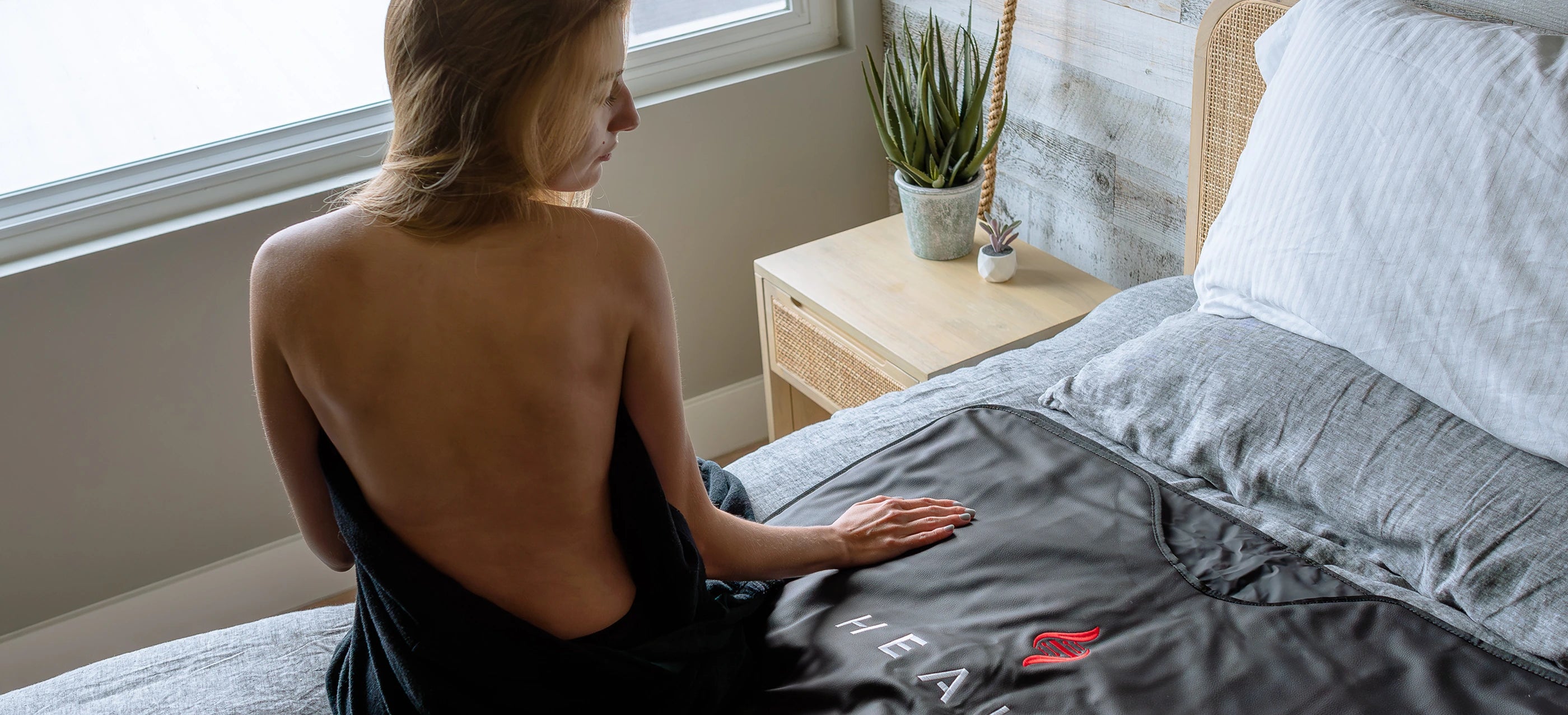
Many lifters and gym-goers incorporate FIR at home using tools like Healix infrared sauna blankets, which provide a convenient way to apply controlled heat after workouts. Regular, consistent use as part of a recovery routine may help reduce muscle stiffness, ease soreness, and support overall comfort after demanding lower-body sessions.
For best results, pair infrared recovery with hydration, stretching, and sufficient rest to optimize muscle repair and functional performance.
Safety and Considerations
Infrared therapy is generally low-risk when used properly. Sessions are brief and customized to personal tolerance, with gradual exposure recommended for those new to infrared recovery. While it can support soreness reduction and circulation, it should not replace professional guidance or medical treatment for injuries or severe pain.
Conclusion
Infrared therapy can play a meaningful role in post-leg day recovery by easing soreness, supporting strength restoration, and enhancing circulation. Though benefits are modest and best when combined with traditional recovery strategies, FIR is a practical, low-risk tool for lifters seeking to maintain performance and comfort after challenging lower-body sessions.

No Commitment, No Spam.
Discover the psychological and biological tools that actually make a difference.
Get a free expert-developed e-book covering the top biological drivers of longevity and the psychology behind lasting wellness. Includes simple mental exercises and follow-up blogs to help you turn insights into real, lasting change.
Your information is secure with us. We’ll only send helpful, expert-backed content.
References:
- 1. Lin C. et al. Post-Exercise Infrared Recovery in Athletes. Sport Sci Rev. https://doi.org/10.1080/17461391.2023.2185163
- 2. Kowalski J. et al. Effects of Far-Infrared Lamps on Muscle Soreness. Biol Sport. https://doi.org/10.5114/biolsport.2023.119289
- 3. Martínez L. et al. Infrared Therapy and Strength Recovery. Retos. https://doi.org/10.47197/retos.v54.102938
- 4. Kowalski J. et al. Post-Exercise Sauna Effects. Biol Sport. https://doi.org/10.5114/biolsport.2023.119289
- 5. Belmonte R. et al. Comparison of FIR and Cryotherapy Recovery. PLoS One. https://doi.org/10.1371/journal.pone.0027749
- 6. Zhou Q. et al. Mechanisms of Infrared Therapy for Muscles. Front Sports Act Living. https://doi.org/10.3389/fspor.2025.1462901
- 7. Kowalski J. et al. Post-Exercise Infrared Recovery in Athletes. Biol Sport. https://doi.org/10.5114/biolsport.2023.119289


