


Infrared vs. Cold Therapy: When to Use Each for Recovery

If you train often, deal with soreness, or simply want your body to recover well, one question comes up again and again: should you use infrared vs cold therapy? My honest answer is that both can be useful. The better choice depends on what your body needs in that moment, which is really what smart recovery methods are all about.
At HEALiX, we like to keep recovery practical. Your body usually gives you a pretty clear signal if you pay attention. If something feels swollen, sharp, or freshly irritated, cold usually makes more sense. If you feel stiff, tight, or generally run down, heat or infrared often feels more supportive. That is the simplest way to think about heat vs ice, and it covers most situations well¹²³.
What cold therapy is best for?
Cold therapy works by lowering tissue temperature, which helps calm things down. It can reduce local blood flow, ease pain, and slow the inflammatory response. That is why people often reach for it right after a hard workout, a flare-up, or a new injury. When the goal is to reduce swelling and get short-term relief, cold is usually the better first step¹²³.
This matters even more when you need to bounce back quickly. Maybe you have another training session soon, a game coming up, or just do not have time to feel sore for long. In those moments, cold methods like ice packs, cold water immersion, or cryotherapy can be genuinely helpful¹³⁶.
One thing I always like to mention is that cold should not be used all the time automatically. If you are using intense cold around strength training too often, you may blunt some of the adaptation you actually want. So I see cold as a useful tool, but not a daily default¹⁵.
What infrared and heat are best for?
Infrared and heat work differently. Instead of cooling the area down, they help increase circulation, improve tissue flexibility, and make stiff, sore muscles feel easier to move. That is why heat tends to shine after the initial inflammatory phase, once swelling is no longer the main issue and the goal becomes comfort, mobility, and ongoing repair²³⁴⁵.
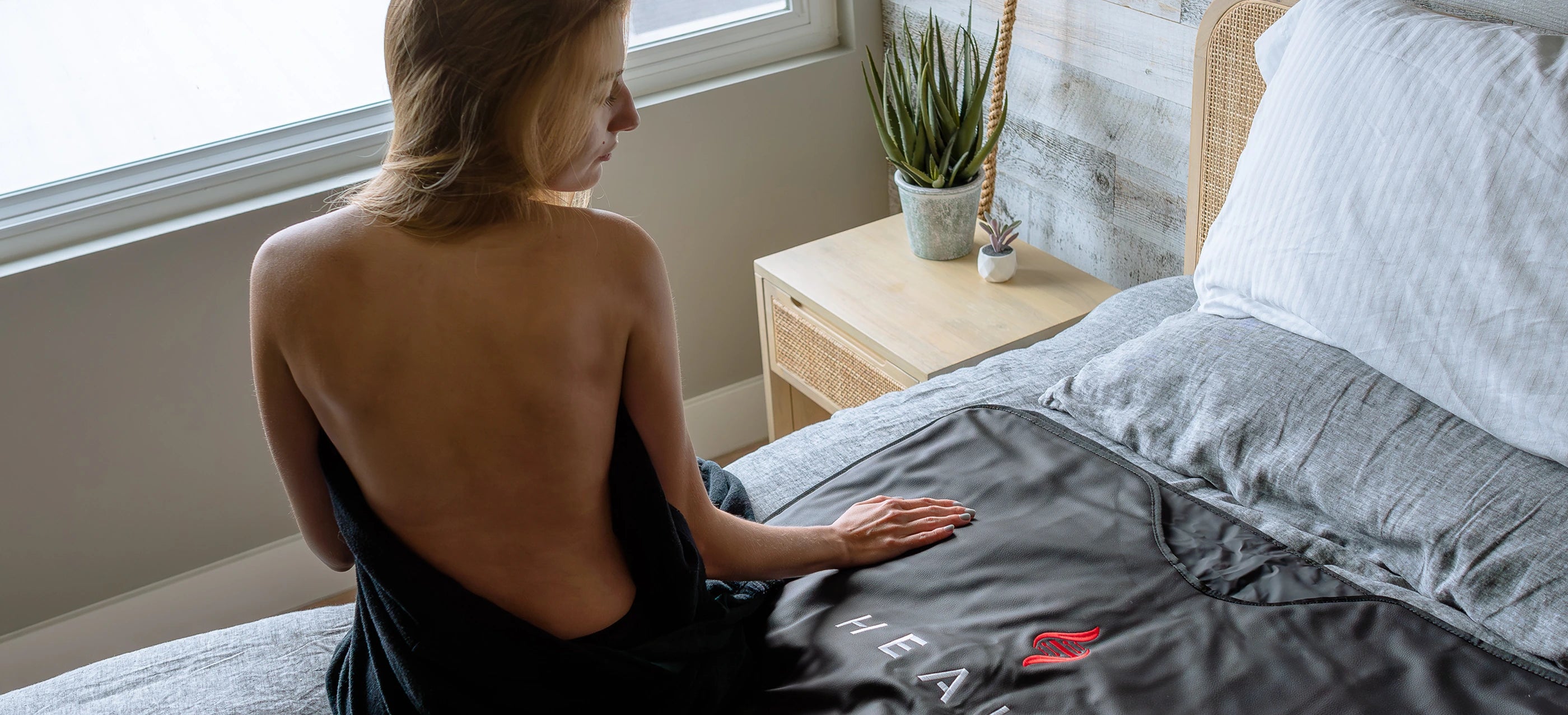
This is where infrared can fit really well into a recovery routine. If you wake up stiff, feel restricted after training, or just carry that deep, lingering soreness, heat often gives you that comforting “ah, that feels better” response. For many people, that is exactly why something like the HEALiX Infrared Sauna Blanket becomes part of their weekly rhythm. It is not about chasing a miracle. It is about giving your body a calm environment where recovery can do its work.
Research comparing heat and infrared with other recovery approaches suggests they can be especially useful when the goal is to restore movement, ease soreness, and support function after the acute phase has passed²³⁴⁵.
Parasympathetic Support (and Why It Matters)
One of the most underrated recovery wins with infrared and heat is how quickly it can help your body shift into a calmer “rest and digest” state, also known as the parasympathetic nervous system. When we are stressed, overtrained, or running on a tight schedule, the body can stay stuck in “go mode” longer than it should. A steady heat routine can feel like a clear signal to downshift, which is exactly what you want after a hard session or a long day.
Cold plunge and cold water immersion can fit into this parasympathetic conversation too, just in a different way than heat. The cold hit is intense, so the body often goes into a brief “alert” response at first, but many people experience a noticeable calm afterwards. That post-plunge downshift is the part we care about for recovery: slower breathing, a steadier feel in the body, and that “reset” sensation that makes it easier to unwind. Practically, I like to think of cold as a fast switch that can help you feel better quickly, while heat is the longer, gentler signal that helps you stay relaxed. Used at the right time, both can support that recovery state; you just want to match the tool to what your body needs that day.
Over time, that kind of consistency may also support healthier cortisol regulation. Cortisol is not “bad”, it is a normal hormone your body uses for energy and alertness, but you want it to follow a natural rhythm instead of spiking at the wrong times or staying elevated. If your evenings are calmer and your sleep improves, recovery usually improves too, and that is where infrared can become a surprisingly meaningful part of a weekly routine.
The simplest way to choose
If you want a quick rule of thumb, here is how I would break it down:
If it has just happened and the area feels hot, swollen, or irritated, choose cold¹³⁶.
If it has been a day or two and the main issue is stiffness, tightness, or lingering soreness, choose infrared or heat²⁴⁵.
If the problem is chronic, like repeated muscle tension or ongoing joint discomfort, heat or infrared often feels more natural and sustainable³⁴⁵.
If your schedule is demanding and you need short-term relief fast, cold can help early on, and heat can come in later to support recovery and movement¹⁵.
That is really the practical difference between recovery methods that calm the body in the moment and those that help it move forward in the next phase.
Can you use both?
Yes, absolutely. In some cases, that is actually the smartest option. Contrast-style recovery, which alternates hot and cold, can help with circulation, pain perception, and stiffness. Some evidence also suggests that combining infrared and cryotherapy may offer useful benefits for blood flow and recovery comfort⁷⁸.
I would not overcomplicate it, though. You do not need a perfect protocol to get results. You just need to match the method to the situation. Fresh injury or swelling? Cold. Stiffness, limited movement, or longer-term recovery? Heat or infrared. That simple decision-making process covers most real-world recovery needs very well¹²³⁴⁵.
The bottom line
If you want the short answer to infrared vs cold therapy, here it is: cold is usually better for acute inflammation, swelling, and immediate relief, while infrared and heat are usually better for stiffness, circulation, and later-stage recovery. Neither one is universally better. They just solve different problems.
That is how I think about heat vs ice at HEALiX. Use the tool that fits the moment, not the one that sounds best in theory. When you do that, recovery becomes more intentional, more effective, and much easier to trust.

No Commitment, No Spam.
Discover the psychological and biological tools that actually make a difference.
Get a free expert-developed e-book covering the top biological drivers of longevity and the psychology behind lasting wellness. Includes simple mental exercises and follow-up blogs to help you turn insights into real, lasting change.
Your information is secure with us. We’ll only send helpful, expert-backed content.
References:
- 1. https://doi.org/10.1007/s00421-021-04683-8
- 2. https://doi.org/10.1080/00325481.2015.992719
- 3. https://doi.org/10.1016/j.asmr.2025.101143
- 4. https://doi.org/10.26603/001c.129968
- 5. https://doi.org/10.1007/s40279-025-02300-8
- 6. https://doi.org/10.1371/journal.pone.0027749
- 7. https://doi.org/10.12659/msm.922544
- 8. https://doi.org/10.1016/j.fmre.2024.07.008


