


Red Light vs. Infrared: Which is best for you?

In the world of light-based wellness therapies, understanding the differences between red light, near-infrared (NIR), and far-infrared (FIR) is essential to determine which is best suited to your goals. While these wavelengths cross over in benefits, some produce more pronounced results in one vs. the next. Different wavelengths also have unique biological effects and clinically supported applications¹².
How Wavelengths Differ?
Red Light (~620–680 nm) penetrates the superficial layers of the skin (epidermis/upper dermis, <1 cm). It is strongly absorbed in blood and skin, making it ideal for skin rejuvenation, acne, and superficial wound healing³⁴. Red light is also strongly correlated to mitochondrial effects, and ATP production.
Near-Infrared (NIR, ~750–1,000 nm) reaches deeper tissues (3–4 cm) and also interacts with mitochondria. NIR is commonly used for deeper wound and muscle healing, pain relief, endothelial support, and microcirculation³⁴⁵⁹.
Far-Infrared (FIR, ~3–1,000 μm) acts primarily via thermal and water-molecule effects, penetrating 4–5 cm through radiant heating. FIR therapy is particularly effective for cardiovascular function, microcirculation, lymphedema and edema management, recovery, pain management and sauna-like detoxification⁶⁷⁸.
5 Important Benefits to Consider
1. Detox, Lymph Flow, and Fluid-Related Swelling
FIR increases tissue temperature and vibrational motion of water molecules, enhancing fluid motility, microcirculation, and lymphatic flow⁶. Clinical studies show FIR mats and bio-ball systems improve blood flow, raise epidermal and core temperature, and reduce inflammatory fluid markers during prolonged use⁶.
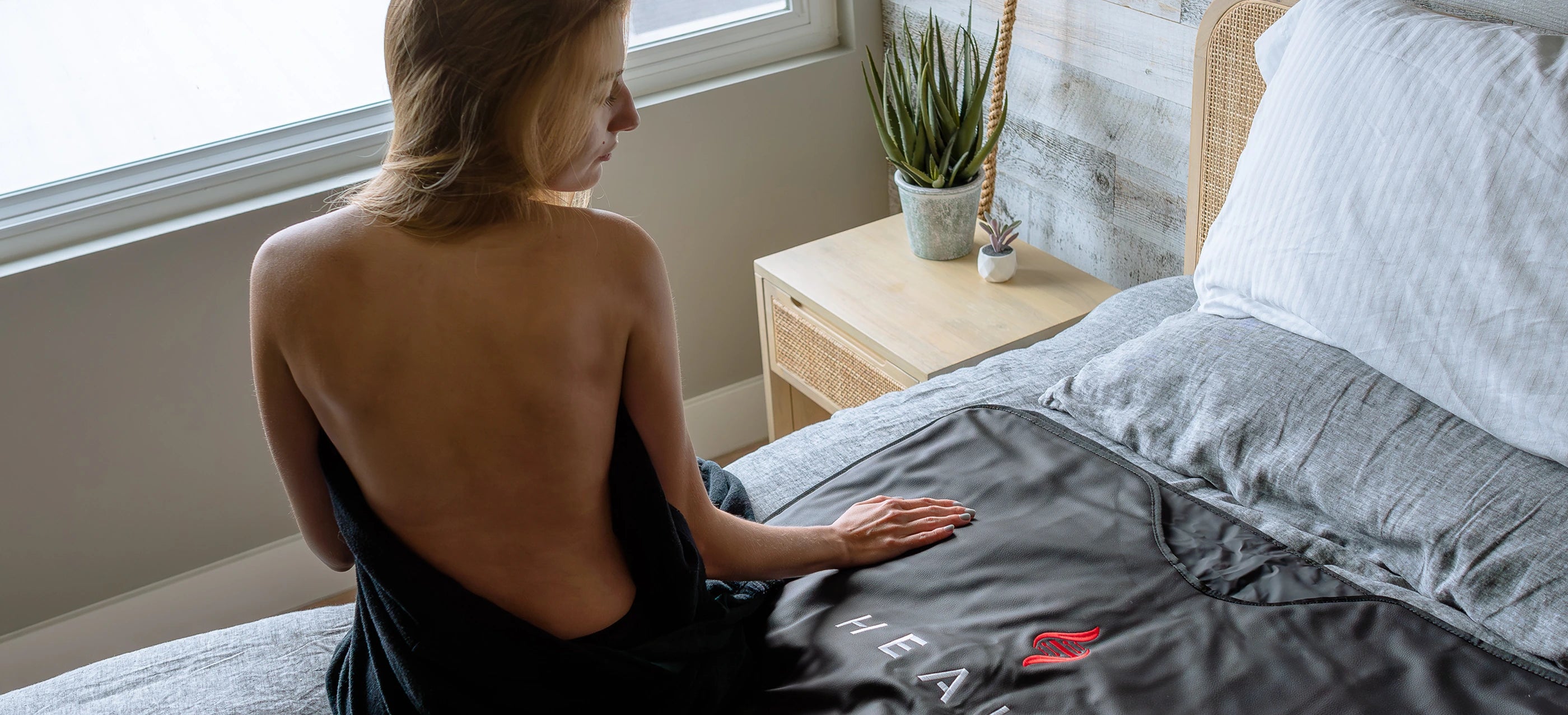
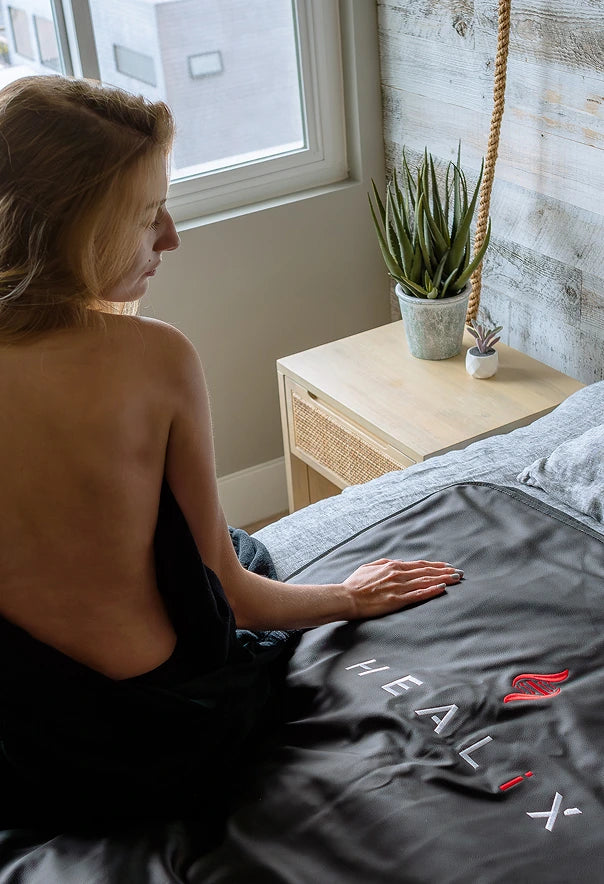
In patients with limb lymphedema, FIR therapy has reduced limb circumference, improved skin elasticity, and enhanced quality of life⁶. For detox-like sweating, lymph flow, and edema/lymphedema, far-infrared therapy is clearly the strongest evidence-based option. The HEALiX Infrared Sauna Blanket provides these FIR benefits conveniently at home.
2. Cardiovascular and Vascular Health
FIR improves endothelial function, promotes nitric-oxide-mediated vasodilation, and reduces arterial stiffness in healthy individuals⁷⁸. Red and NIR photobiomodulation (PBM) also support endothelial function by increasing ATP, nitric oxide, and angiogenesis while reducing inflammatory markers³⁴.
Overall, FIR shows stronger clinical evidence for systemic vascular health, while red/NIR provides additional cellular-level support.
3. ATP / Mitochondrial Support and Athletic Recovery
Red and NIR PBM enhance mitochondrial cytochrome c oxidase activity, ATP production, and cellular metabolism, reducing oxidative stress and modulating nitric oxide and calcium signaling³⁴. NIR wavelengths around 810–850 nm penetrate deeply, supporting dermal and muscle recovery, as well as wound repair³⁴⁵⁹.
FIR may also support mitochondrial function and ATP synthesis through preclinical data³⁴. For performance-oriented recovery and cellular energy, red + NIR therapy is best supported. The HEALiX Glow Pod combines red and near-infrared wavelengths at the proper ratio or cellular energy, athletic recovery, and skin health.
4. Skin Health and Rejuvenation
Low-level red and NIR LED therapy increases collagen, elastin, and ATP in human fibroblasts and skin explants³⁴. Clinical studies confirm improvements in wrinkles, acne scars, burns, UV damage, vitiligo, psoriasis, and overall skin texture³⁴⁵.
For skin rejuvenation and anti-aging, combined red/NIR therapy is the preferred choice. The HEALiX Glow Pod again provides a convenient single solution for mitochondrial support and skin health³⁴.
5. Pain Reduction and Local Circulation
Red and NIR PBM have demonstrated pain relief in osteoarthritis, neuropathic pain, temporomandibular disorder, and post-surgical conditions³⁴⁵. NIR (830-850 nm) can produce sustained increases in microcirculatory flow, whereas 633 nm red shows less effect³⁴.
For pain reduction and circulation through Red and NIR PBM we recommend our 1:1 ratio light pod the HEALiX Elevate Light Pod.
FIR therapy also reduces pain in chronic conditions and enhances local blood flow and tissue temperature⁷⁸. For pain management and superficial circulation support, both FIR and red/NIR are effective, with NIR penetrating deeper and FIR providing strong thermal and circulatory benefits.
Practical Takeaways
- Detox, lymphatic flow, edema/lymphedema, and vascular health: Evidence favors far-infrared therapy⁶⁷⁸.
- ATP, cellular energy, athletic recovery, and skin rejuvenation: Evidence favors red + near-infrared PBM³⁴⁵⁹.
- Pain relief and local circulation: Both FIR and red/NIR are effective; treatment consistency and dosing are more important than wavelength⁷⁸.
Across all modalities, study sizes are generally small and protocols vary. These therapies should be considered adjuncts to, rather than replacements for, standard medical care³⁴⁵.
Concluding Note
Choosing between red light, near-infrared, or far-infrared depends on your goals. Use FIR for circulation, detox, and edema support, and red + NIR for cellular energy, athletic recovery, and skin health. For pain relief, a combination approach can be effective. Always consider these therapies as complementary tools alongside conventional care for best results.
No Commitment, No Spam.
Discover the psychological and biological tools that actually make a difference.
Get a free expert-developed e-book covering the top biological drivers of longevity and the psychology behind lasting wellness. Includes simple mental exercises and follow-up blogs to help you turn insights into real, lasting change.
Your information is secure with us. We’ll only send helpful, expert-backed content.
REFERENCES:
- 1. Yadav A. Red and Near-Infrared Light Therapy Applications. Photodermatol Photoimmunol Photomed. https://doi.org/10.1111/phpp.12282
- 2. Hamblin M. Mechanisms of Photobiomodulation. J Photochem Photobiol B. https://doi.org/10.1016/j.jphotobiol.2017.04.014
- 3. Salehpour F. et al. Applications of Photobiomodulation Therapy. Int J Mol Sci. https://doi.org/10.3390/ijms26115134
- 4. Kocherova I. et al. Photobiomodulation Cellular Effects. Materials (Basel). https://doi.org/10.3390/ma14123427
- 5. Rojas J. et al. Light Penetration in Biological Tissue. PLoS One. https://doi.org/10.1371/journal.pone.0047460
- 6. Clinical FIR and lymphedema studies. https://doi.org/10.1007/s10103-016-2135-0
- 7. Winker R. et al. Infrared Therapy and Vascular Function. Thromb Haemost. https://doi.org/10.1055/a-2717-5157
- 8. Crandall C. et al. Infrared Sauna Physiological Effects. Physiology. https://doi.org/10.1152/physiol.2025.40.s1.0304
- 9. Zomorrodi R. et al. Near-Infrared Effects on Brain and Mood. Biology. https://doi.org/10.3390/biology12010060


